
Reading Dangerous, Dirty, Violent, and Young
We who marched against the Vietnam War or for Civil Rights, Feminism, or other like causes often morphed into upstanding citizens. Like others who came of age during the late 60s and early 70s, I dabbled in radical politics and also adopted the mores of the disco ball scene.
I knew members or former members of Students for a Democratic Society, including offshoots like the Weather Underground. The Student Nonviolent Coordinating Committee had members who later joined the Black Panther Party, the Black Liberation Army, or one of its affiliated groups.
The book by Zade Ayers Dohrn, Dirty, Dangerous, Violent and Young, was the book I didn’t realize I needed to read to reconcile part of my past. Bernadine Dohrn was the poster child as a radical woman who was wanted by the FBI. She and her husband, Bill Ayers, spent over 10 years living off the grid, going on cross-country trips to friendly places and people, and, with the rest of America, moved into a different time and era while the FBI poster pictures remained frozen in time.
I was not a member of the Underground or a child, like Zade Ayers Dohrn, confused by living on the road with parents who assumed different names. But I was involved with, or had friends who were involved with, radical groups, communes, or collectives, and who talked in terms of “when the Revolution comes.”
Such talk scared me. The idea of taking up guns and using violence was anathema. But I did open my house to passers-through, adopted a child born to drug-addicted and jailed parents, had a multi-racial family and friendships.
I was in college in the years when we were figuring out racial identities, sexual identities, and where we fit in the culture. I went to Columbia University in New York City, partly because of its headline-making student demonstrations. I was part of a collective that published a socialist magazine and made editorial decisions by consensus (a process I would recommend to no one).
I heard pick-up lines like “let’s smash monogamy together” and didn’t know whether the guy was a true believer or taking advantage of the politics of the times — probably both.
I worked for nonprofits doing good and creating opportunities “for maximum participation by the poor.” Over the years, I learned that people brought their own dysfunctions with them, and it wasn’t just the system that didn’t work. I became a manager and director, and was The Boss employees grumbled about.
Corrective for Cynicism
Revisiting the idealism of the 60s and 70s in reading Zohrn’s book was a great corrective for this time of cynicism and self-dealing. I remember the idealism of collective decision-making, when the smallest decision was open to democratic principles. I see the idealism of those times with the many ways our society has changed since then to be more equitable in regard to gender, sexuality, and racial identity. The movie One Battle After Another also recalls those times.
My granddaughters are raised with books like Baby Feminists and dolls of multi-racial identities.
I remember hearing Kathleen Soliah (name changed to Sarah Olson) at a small group discussion, after she had returned from jail time for supporting Symbionese Liberation Army actions in which people were killed in a bank robbery. The SLA had abducted heiress Patty Hearst.
Sarah Jane Olson had lived for years with her doctor husband and three children in St. Paul, Minnesota. Soliah was identified in 1999 and spent years in jail for her involvement with the SLA. She was unrepentant. I left the meeting dismayed, as I thought innocent people had been killed, in actions she had abetted.
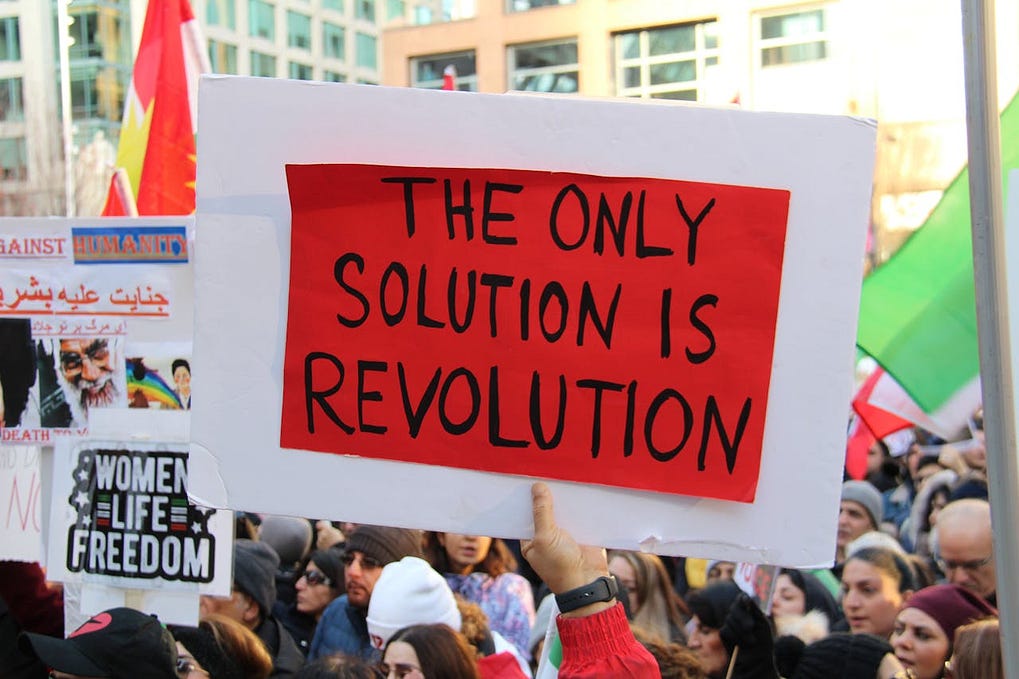
Zohrn reminds us in his book that the word “revolution” can mean its own opposite. Revolution is radical change; revolution is also a turnaround and a return to the beginning, the cycle of change back to the beginning.
The idealism of the times led to a violent response, as did the American Revolution. We have had No Kings since 1776.
I understand how ideals get confused in messy reality.
I recently watched documentaries about the American Revolution and realized it was a much messier time than our romanticized history suggests. I have lived through times that have seen dramatic changes in assumed roles for women, marriage to people of the same sex, “Gray Panthers,” and other dramatic changes you can name.
I was also oh-so-proud of the Minnesota response to recent federal incursions. I talked to friends in Minnesota who were part of neighborhood watch groups that had formed to safely get children to and from school, to arm themselves with whistles and cell phones, and who practiced new peaceful songs in church sanctuaries and at street protests. The time and attention taken from and by ordinary people whose lives were disrupted were enormous. I hope they get the Nobel Prize for peace.
So, we are in revolution, and in revolution, in our old age. What’s next?
Leave a Comment